Recovery & wellbeing
Mental Health Peer Support Groups
A place to be with people who understand — where you can talk, or simply listen.
What this service offers
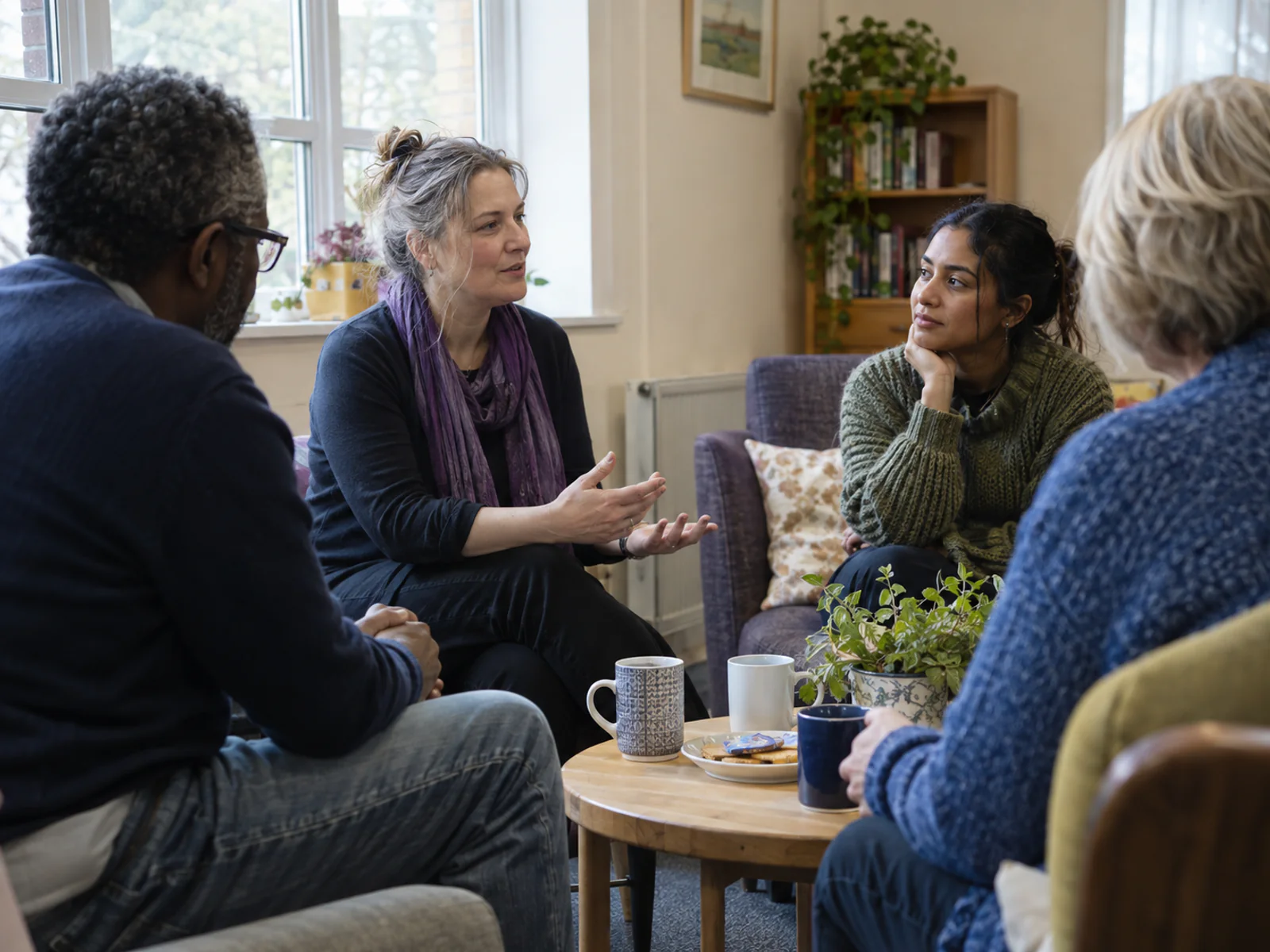
Long-term illness and mental health challenges can be isolating. Peer support groups bring together people with similar experiences so nobody has to carry everything alone.
Groups are guided by a facilitator who keeps the conversation safe and respectful. You can say as much or as little as you like. Nobody will ask for your diagnosis, and listening is always enough.
Who it’s for
- Adults living with a long-term health condition or mental health challenge
- People who feel isolated and would like to connect with others who understand
- People who want support alongside — not instead of — their GP or health team
What you can expect
- A small group and a facilitator who explains the group agreement at the start
- Shared experience rather than advice — people talk about what has helped them
- Freedom to join in, pass, or just listen
- An agreement that what is shared in the group stays in the group, with safeguarding as the only exception
What support may include
Shaped around what you need
Every person is different, so support is tailored. Depending on your goals, it may include:
- Check-ins on how the week has been
- Gently facilitated discussion on topics such as energy, sleep, setbacks and small wins
- Information about other KND services and local support
What this service doesn’t provide
Being clear about our limits helps you get the right help. This service does not offer:
- Therapy, counselling or clinical treatment
- Medical advice about diagnosis or medication
- Crisis or emergency support — see our urgent help page

Meet our wellbeing lead
Laga Monique Deza, Wellbeing & Mental Health Support Lead
Monique leads KND’s wellbeing and mental health support, bringing over 10 years of trauma-informed, culturally responsive experience with children, neurodivergent people, families and marginalised communities in France and the UK.
Questions about peer support groups
More answers on our FAQs page.
Do I have to talk about my health?
No. Many people listen for several sessions before they share anything. Saying “pass” is always fine.
Is this a crisis service?
No. Peer support groups are not an emergency or clinical service. If you need urgent help, call NHS 111 and choose the mental health option, or 999 in an emergency.
What happens to what I share?
Groups agree that what is shared stays in the group. The only exception is if someone is at serious risk of harm, when safeguarding responsibilities apply.
Often used alongside
- Recovery & wellbeingOnline Peer CommunityModerated online spaces to connect with others between sessions — ideal if leaving the house, travel or energy makes in-person groups difficult.View service
- Recovery & wellbeingWellbeing WorkshopsRelaxed, practical sessions on stress, energy, routines and boundaries — one small, usable skill at a time.View service
- Recovery & wellbeingOne-to-One MentorshipRegular one-to-one conversations with a mentor who helps you set realistic goals, rebuild confidence and plan practical next steps.View service
Interested in peer support groups?
Get in touch and we will talk through whether it is the right fit for you now — no commitment, no pressure.