Wellbeing
What to Expect from a Resilience and Wellbeing Session
Nervous about joining a wellbeing session? Here is what a well-run, community-based session should feel like — and what should never happen.
- Published by
- KND Community Organisation
- Published
- Updated
- Reading time
- 4 minutes
You have heard about resilience and wellbeing sessions, but the thought of going makes your chest tighten. Will they ask you to share painful stories? Will you be the only one struggling to keep up?
A good community session should be built for people exactly like you — people living with long-term illness or mental health challenges. No performance. No judgement. Just quiet, practical help.
That first feeling of dread is normal
Walking into any new space when you are already exhausted takes courage. Perhaps you tried something before that felt cold or corporate, or an online course that assumed you had endless energy. Those experiences leave a mark.
In a community setting, the people running the session often understand that dread first-hand. They will not shame you for arriving late, and they will not ask why you look tired.
The first few minutes
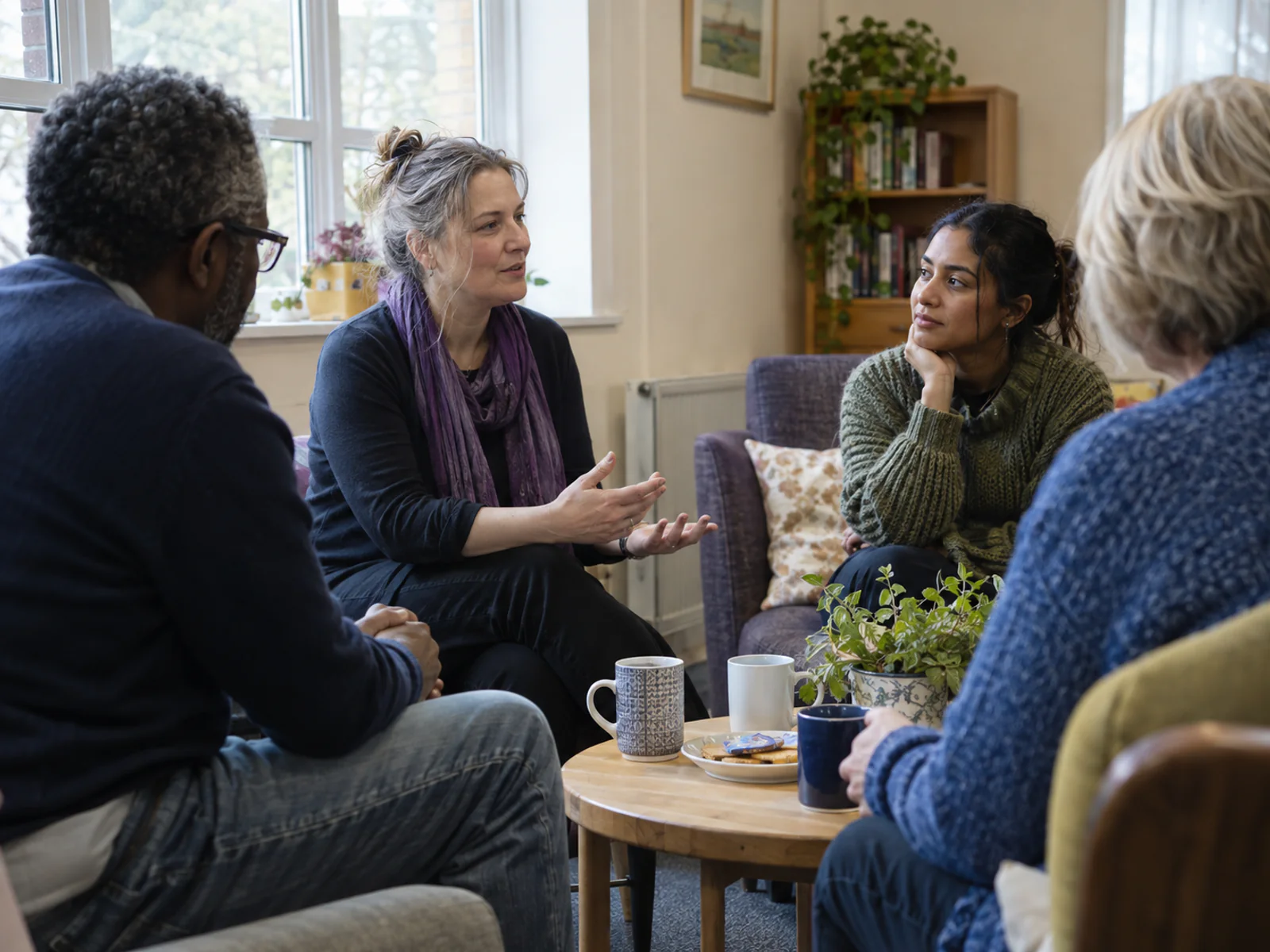
Whether online or in person, you should only need to give a first name or nickname, with no pressure to turn on a camera. In a room, sit wherever feels safest — plenty of people choose a seat near the door.
The facilitator usually explains a short group agreement: you can leave at any time, you do not have to speak, and nobody will call on you unexpectedly. Then there may be a gentle check-in, where “I’m here” or “just listening today” is a complete answer.
This slow, predictable start is not a flaw. It is the whole point.
Where the learning happens
Rather than a long list of techniques, a good session introduces one or two small skills. Examples include a short breathing pattern, a script for saying “I need a break” at work, or a simple way to track your energy without an app.
You can try it, watch, or skip it. If something does not work for your body — a breathing exercise that makes you dizzy, for example — a good facilitator will say “then don’t do it; let’s find something else”. The skill is not the star. You are.
How long does a session last?
Sessions for people with long-term health conditions are usually kept deliberately short, with time to settle in and time to close. You should never be expected to stay for the whole session. If you need to leave early, you can.
Is it safe for someone with my condition?
Safety should mean:
- No physical demands — any movement is offered as an option, never an instruction
- No emotional exposure — you control exactly how much you share
- No medical advice — facilitators should encourage you to talk to your GP instead
- No pressure about attendance — you come back when you can
The one thing you need to bring is honesty about your own limits.
Subtract, not just add
Traditional stress advice often adds things: more exercise, more routines, more techniques. For people recovering from illness, that can backfire. Community sessions often focus instead on what to subtract — what to stop doing, what obligation to drop, who to say no to.
One simple exercise: look at a list of common stressors, tick the three that drain you most, and choose one to step back from for a week. Just notice what changes.
Mindfulness without the pressure
If you have tried mindfulness before and felt you failed because you could not clear your mind, you are not alone. Emptying your thoughts is not the goal. Instead, you might be invited to notice one thing — your hand on your leg, the sound of a fan, the taste of water. If your mind wanders, that is what minds do. You gently come back.
Real self-care for someone with long-term illness often looks less like bubble baths and more like cancelling plans, sleeping instead of socialising, and ignoring messages for a day.
If you have a bad day during the session
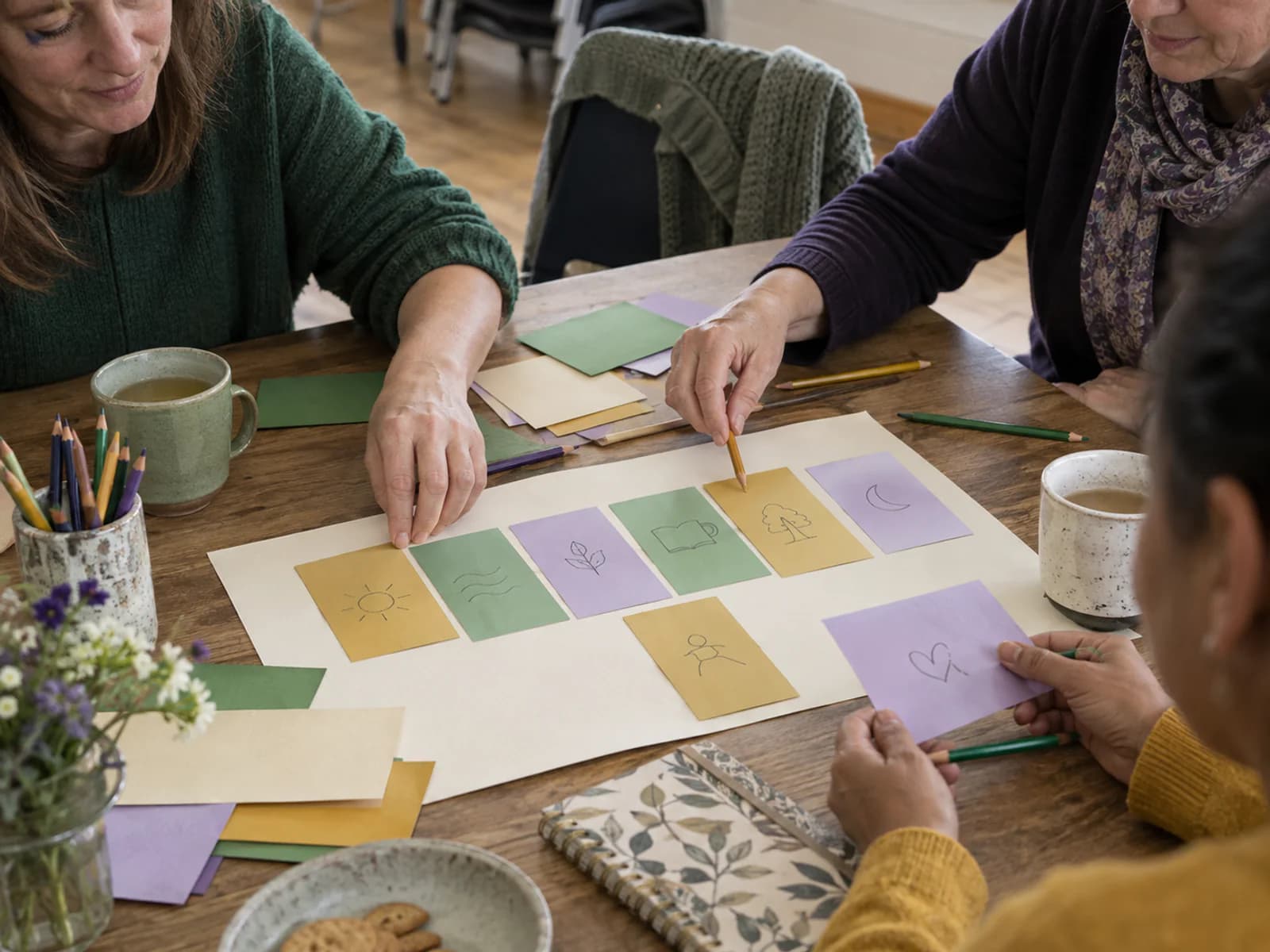
You are allowed to say “I’m having a bad day” and nothing else. Some groups use simple signals — such as coloured cards or emojis — so you can show how you are without explaining. Red might mean “I need to leave”, yellow “I’m struggling but staying”, green “I’m okay”.
What should never happen
- Being made to role-play in front of the group
- Forced icebreakers, singing or physical contact
- Being asked for your diagnosis or compared with anyone else
- A sales pitch or pressure to donate
Preparing for your first session
You need very little: a device and a quiet space if you are joining online, a drink of water, and whatever clothes are comfortable. Arrive a few minutes early if you can — but if you are late, come in anyway. Afterwards, plan to rest. Learning anything takes energy, and feeling tired afterwards is normal.
A pause, not another demand
A resilience and wellbeing session should not be another demand on you. It should be a pause: one small skill, people who understand, and nothing to prove.